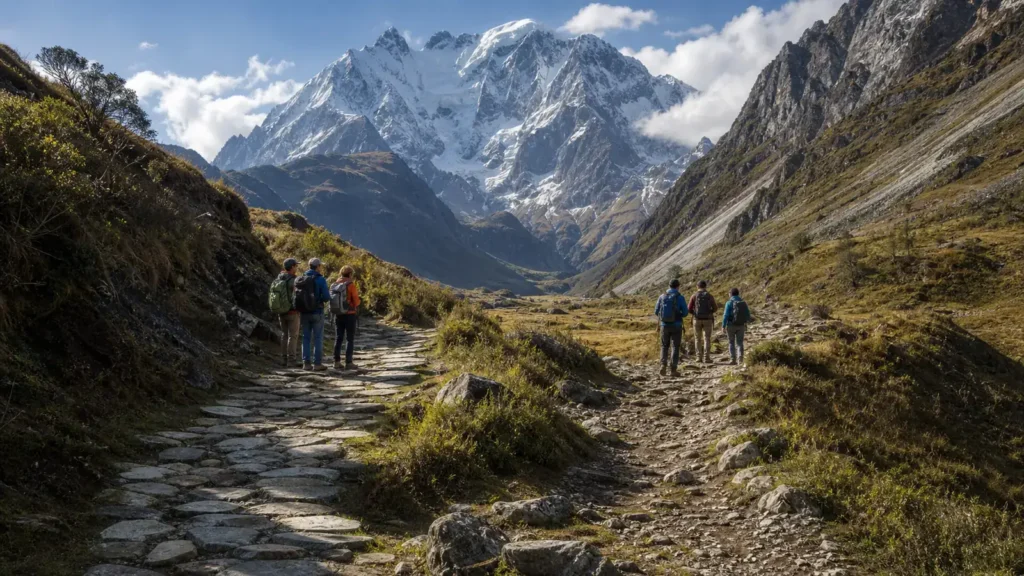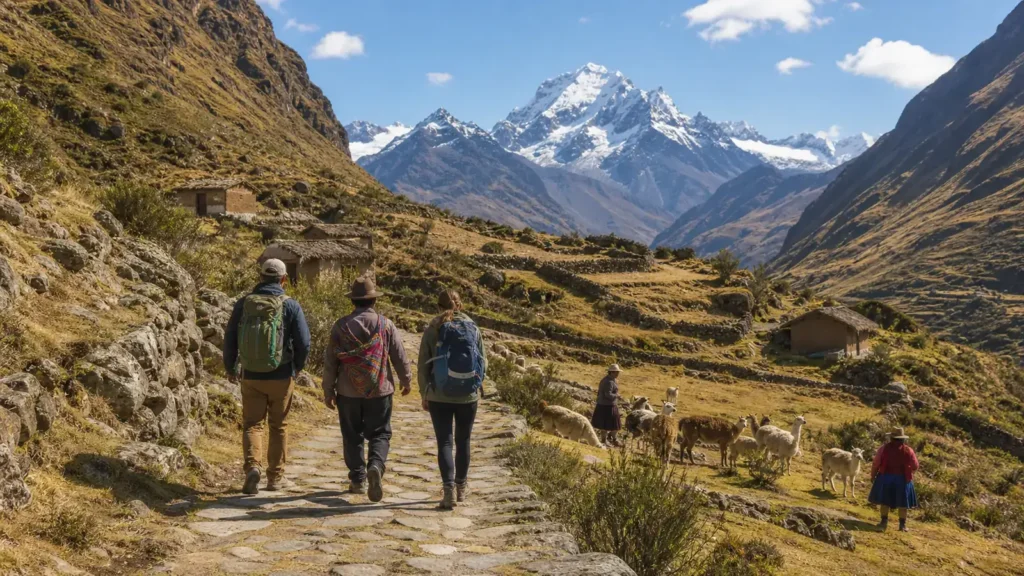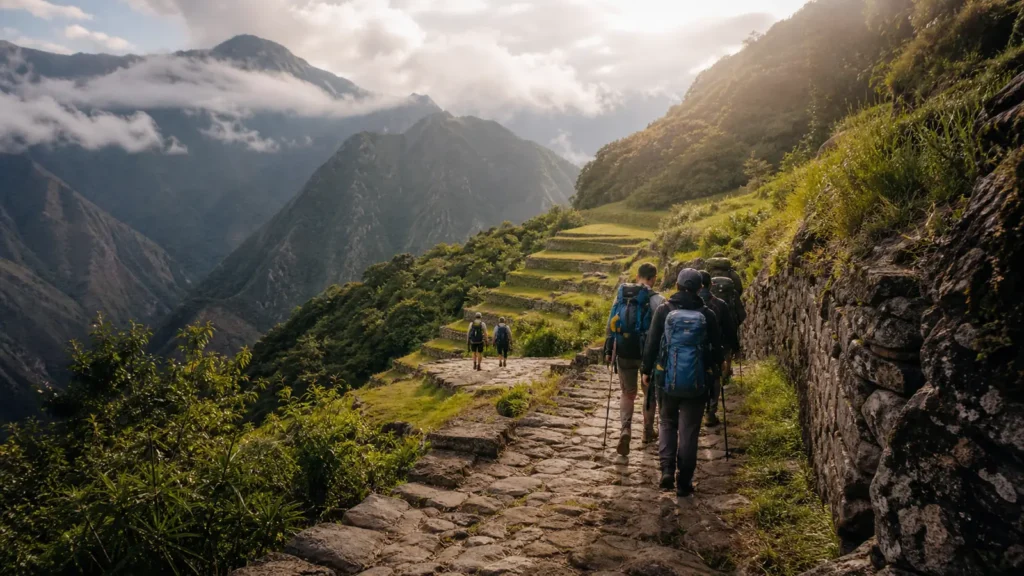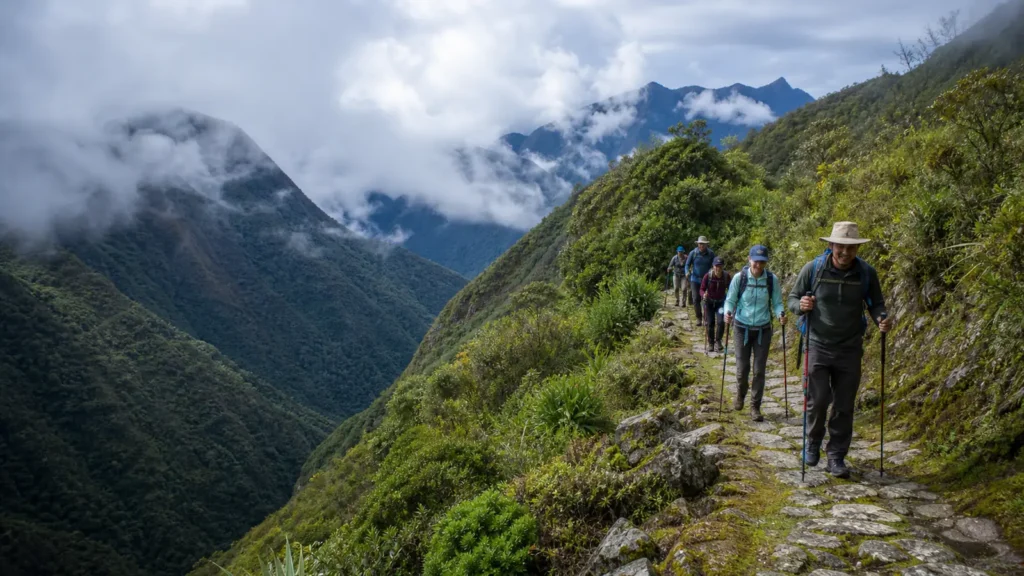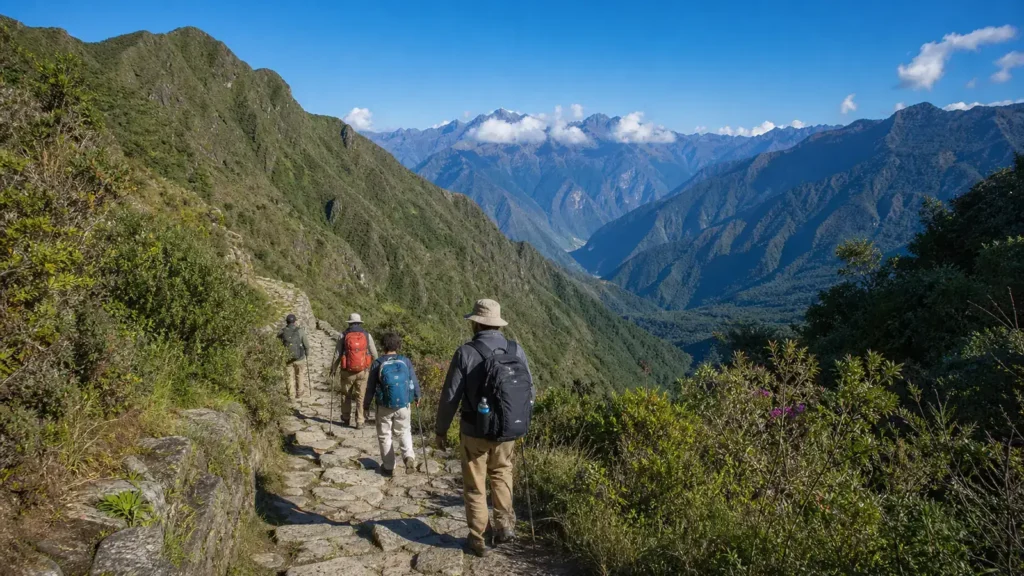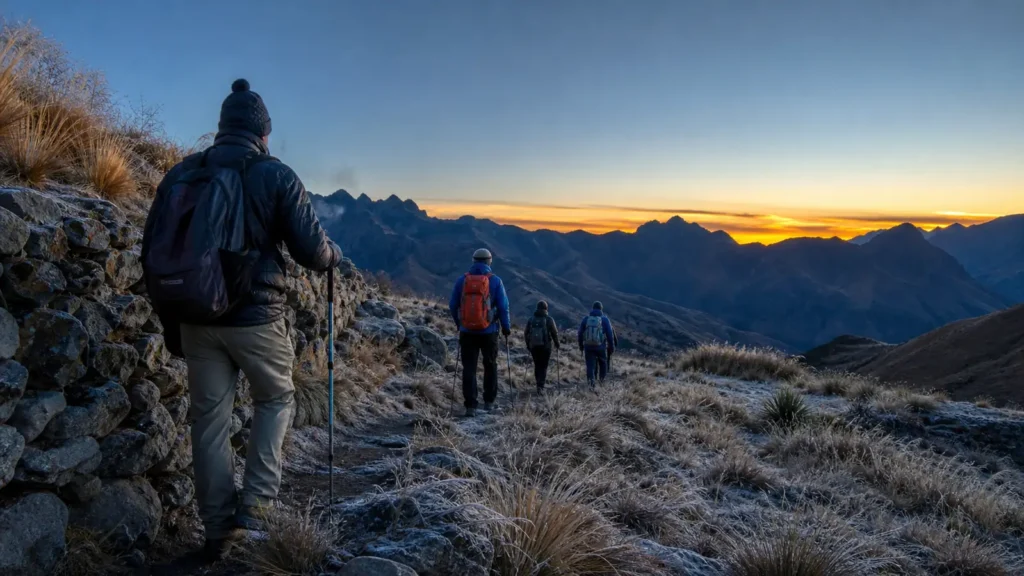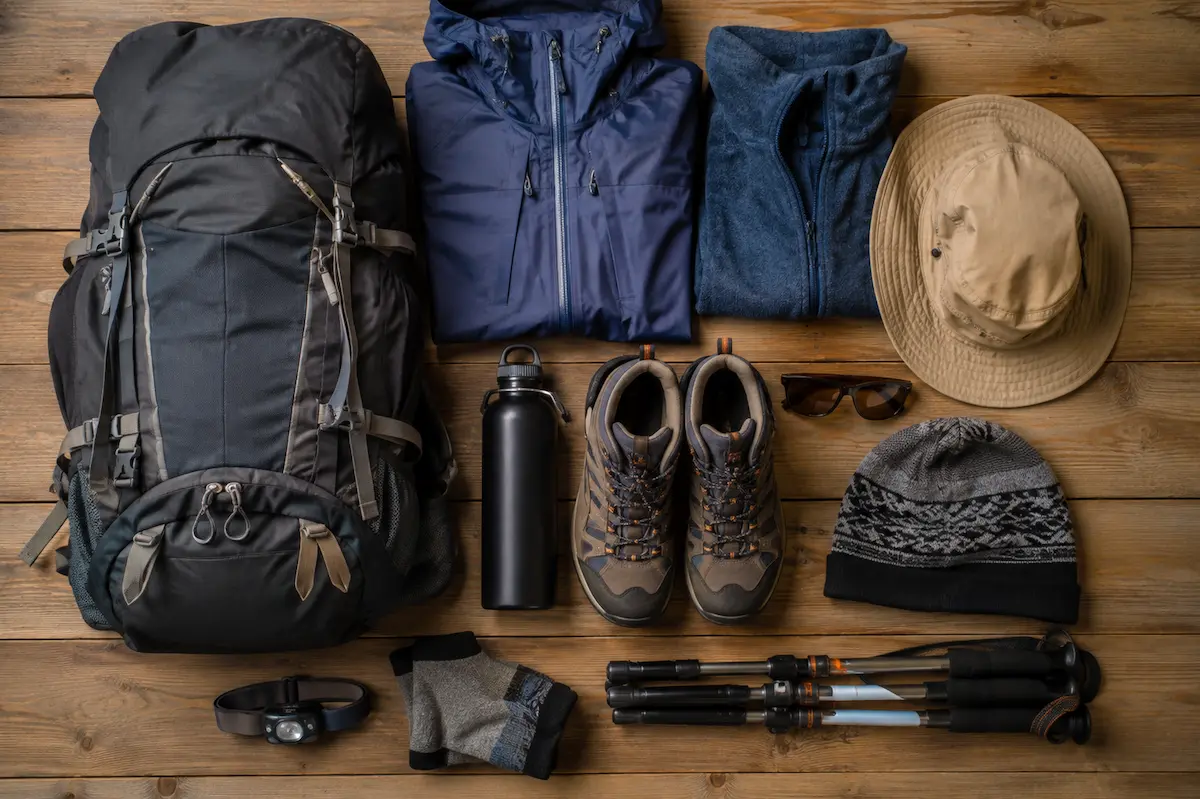

Your Inca Trail packing list should prepare you for several days of hiking through changing elevations and weather conditions without forcing you to carry unnecessary weight.
The goal is not to bring everything you own. The goal is to bring the items you will realistically use on the trail.
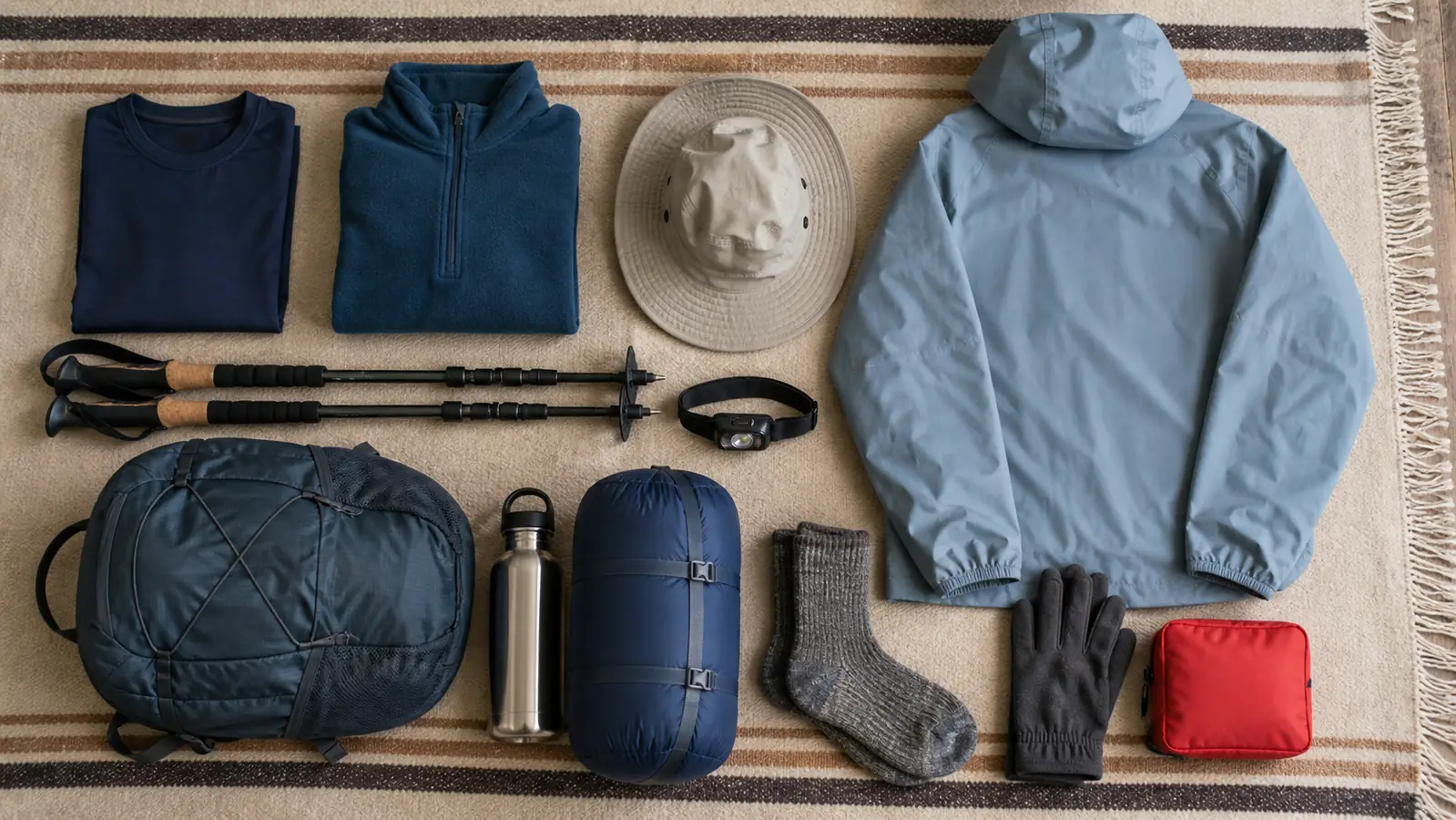
Inca Trail Packing List at a Glance
| Category | Essential Items |
|---|---|
| Footwear | Broken-in hiking shoes or boots |
| Clothing | Layers, hiking pants, socks and warm clothing |
| Rain Protection | Waterproof jacket and backpack protection |
| Sun Protection | Sunscreen, sunglasses and hat |
| Daypack | Water, layers, documents and daily essentials |
| Personal Items | Medication, toiletries and hygiene products |
Choose the Right Hiking Shoes
Your footwear is one of the most important parts of your packing list.
The Inca Trail includes:
- Stone paths
- Uneven surfaces
- Steep staircases
- Long descents
- Sections that can become wet
Choose footwear with good grip and enough support for the type of hiking you are accustomed to.
Do Not Bring Brand-New Boots
Wear your hiking shoes during training before traveling to Peru.
A multi-day trek is not the right place to discover that your footwear causes blisters or pressure points.
Hiking Socks
Bring multiple pairs of hiking socks so you can change into dry socks when necessary.
Avoid relying on heavy cotton socks that stay wet for long periods.
Base Layers
Your base layer sits closest to your skin and should remain comfortable while you are active.
Lightweight shirts that manage moisture are more practical than heavy clothing during long climbs.
Warm Mid-Layer
Bring a fleece or another warm mid-layer for colder sections, mornings, evenings and higher elevations.
You may not wear it throughout the entire day, which is why layering works better than one extremely heavy jacket.
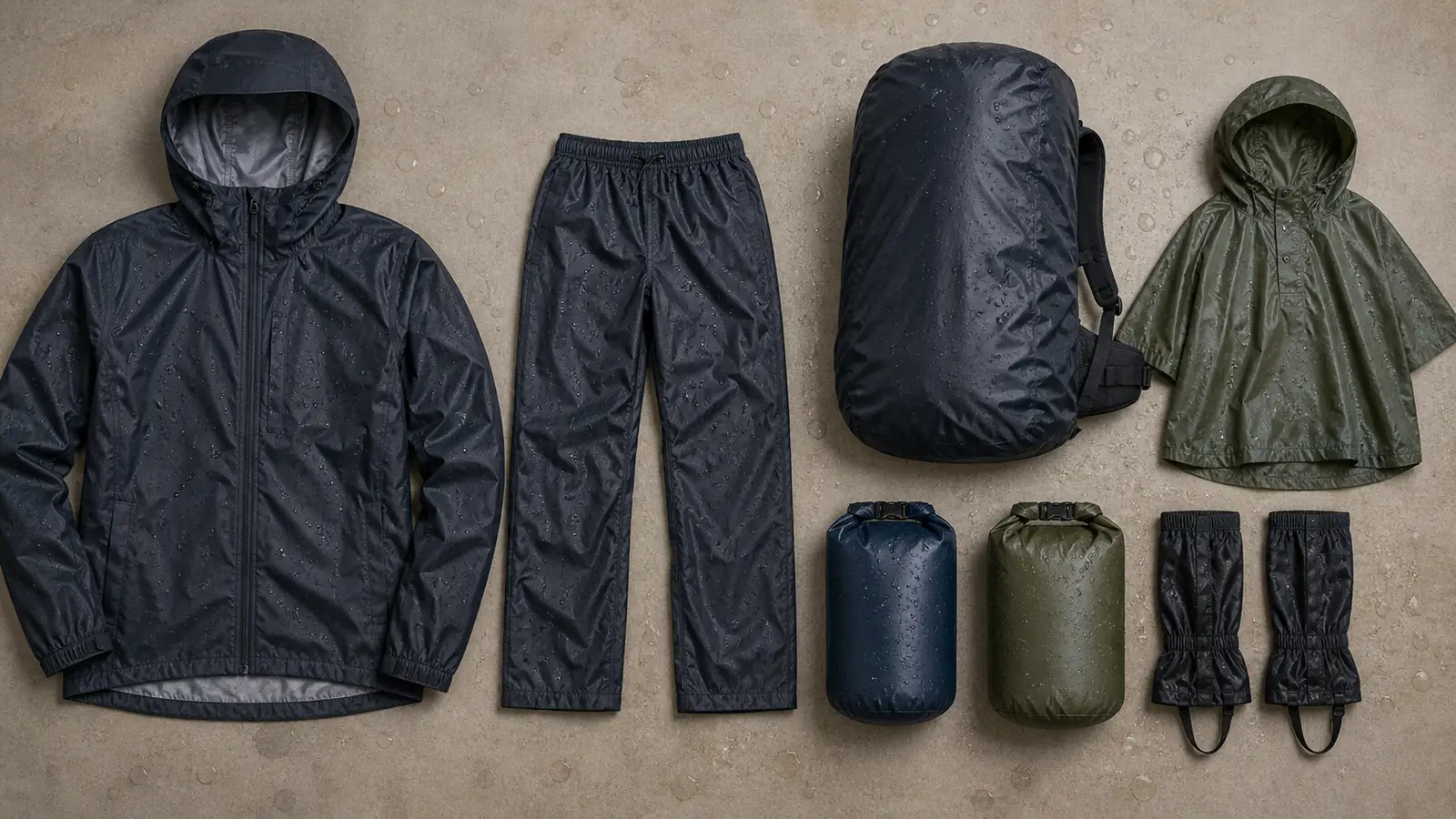
Waterproof Jacket
Rain protection belongs in your backpack even during comparatively dry travel periods.
Mountain weather can change quickly, and a waterproof outer layer can also provide useful protection against wind.
Hiking Pants
Choose comfortable pants that allow unrestricted movement and dry reasonably quickly.
Some travelers prefer convertible hiking pants, while others use lightweight trekking trousers.
Warm Hat and Sun Hat
Bring both if you are completing the Classic route.
A sun hat helps during exposed daytime sections, while a warm hat is useful when temperatures drop.
Sun Protection
High elevation can expose you to strong sunlight.
Bring:
- Sunscreen
- Sunglasses
- Sun hat
- Lip protection
Daypack
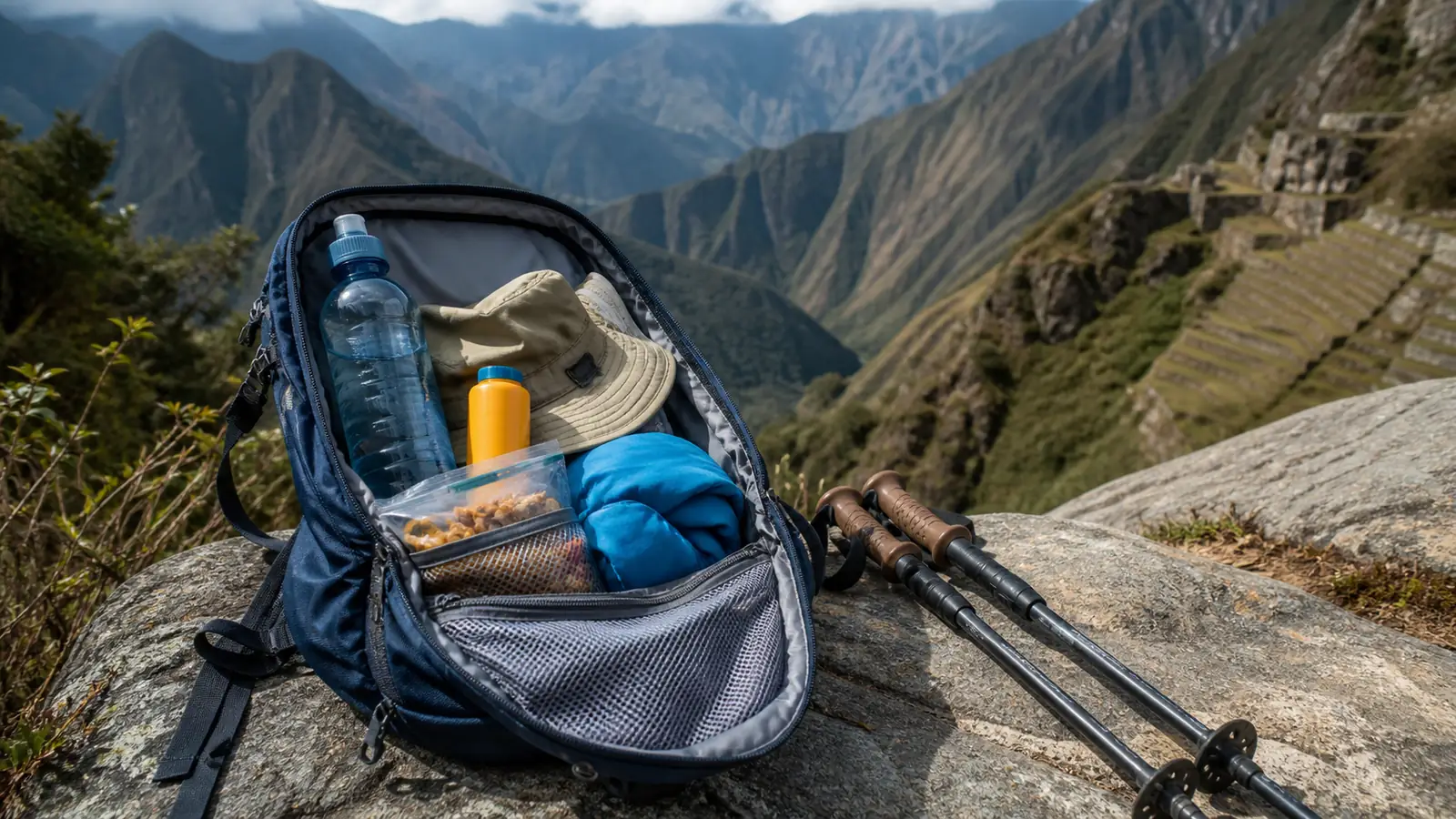
Your daypack should be comfortable and large enough for the items you need while walking without encouraging you to overpack.
What Goes in Your Daypack?
- Water
- Rain jacket
- Extra warm layer
- Sun protection
- Camera or phone
- Personal medication
- Snacks
- Important documents
Keep frequently used items accessible so you do not need to unpack everything every time the weather changes.
Water Bottle or Hydration System
Bring a reusable bottle or hydration system suitable for your backpack.
Drink regularly during the trek rather than waiting until you are extremely thirsty.
Headlamp
A headlamp is useful around campsites and during low-light periods.
It leaves both hands free compared with holding your phone as a flashlight.
Portable Battery
Electricity access is limited during a camping trek.
A portable battery can help keep your phone or camera charged, particularly if you use your device frequently for photos.
Personal Medication
Bring any personal medication you require and keep important medication in an accessible, secure place.
Do not assume you will easily find a specific product once you are already on the trail.
Basic Toiletries
You do not need your complete bathroom cabinet.
Useful items can include:
- Toothbrush
- Small toothpaste
- Hand sanitizer
- Toilet paper
- Wet wipes where appropriate
- Small quick-dry towel
- Personal hygiene products
Rain Cover and Dry Bags
Protect important equipment from moisture.
Even if your backpack has a rain cover, using waterproof internal bags for electronics, documents and dry clothing adds another level of protection.
Trekking Poles
Trekking poles can be useful during long climbs and descents, particularly if you are accustomed to using them.
Use them correctly and follow any trail rules regarding pole tips and protected stone surfaces.
Camera Equipment
Bring only the camera equipment you are willing to carry for several days.
A heavy collection of lenses may seem appealing before the trek but can become frustrating after hours of climbing.
Passport and Important Documents
Keep required documents protected from rain and easily accessible when needed.
What Clothing Should You Wear Each Day?
There is no single outfit that works for every section of the Inca Trail.
Start with layers and adjust as temperatures and activity levels change.
You may feel cold early in the morning and warm after climbing for an extended period.
Packing for Inca Trail Altitude
Higher sections can be colder and windier.
Your packing choices should therefore reflect the altitude profile of the Inca Trail, not only the weather in Cusco city.
Packing According to the Season
The amount of rain and the temperature pattern vary during the year.
Check the best time to hike the Inca Trail guide for seasonal context before finalizing your equipment.
What Not to Pack
Avoid carrying items you are unlikely to use.
Common examples include:
- Multiple heavy casual outfits
- Large bottles of toiletries
- Excessive camera equipment
- Unnecessary electronics
- Your complete Peru suitcase
Where Do You Leave Your Main Luggage?
Most travelers leave the luggage not required for the trek at their accommodation or another arranged storage location.
Confirm your specific storage arrangements before departure.
Should You Pack Differently for the Short Inca Trail?
Yes. A shorter trek generally requires less clothing and camping-related equipment than the multi-day Classic Inca Trail.
Always pack for the actual route you have booked rather than copying a list designed for a different itinerary.
Final Inca Trail Packing Checklist
| Item | Pack? |
|---|---|
| Hiking footwear | Yes |
| Hiking socks | Yes |
| Base layers | Yes |
| Warm mid-layer | Yes |
| Waterproof jacket | Yes |
| Hiking pants | Yes |
| Sun hat | Yes |
| Warm hat | Yes |
| Sunglasses | Yes |
| Sunscreen | Yes |
| Reusable water bottle | Yes |
| Headlamp | Yes |
| Personal medication | Yes |
| Portable battery | Optional but useful |
| Trekking poles | Optional |
Frequently Asked Questions About Packing for the Inca Trail
Do I need hiking boots?
Use footwear suitable for uneven mountain terrain. Some experienced hikers prefer hiking shoes while others prefer boots. The most important factors are comfort, grip and prior use.
Do I need waterproof clothing?
Basic rain protection is recommended because mountain weather can change quickly.
Can I bring my suitcase?
Your full travel suitcase should not be carried as your trekking luggage. Arrange storage for items you do not need on the route.
Do I need a sleeping bag?
Check exactly what your selected trekking service provides or rents before purchasing additional equipment.
Should I bring trekking poles?
They are optional for many travelers but can provide support on climbs and descents if you are comfortable using them.
Pack Light but Prepare Properly
The best Inca Trail packing list is not the longest list. It is the one that keeps you comfortable and prepared while avoiding unnecessary weight.
If you are still organizing your trek, continue with our guide on how to plan the Inca Trail to Machu Picchu.