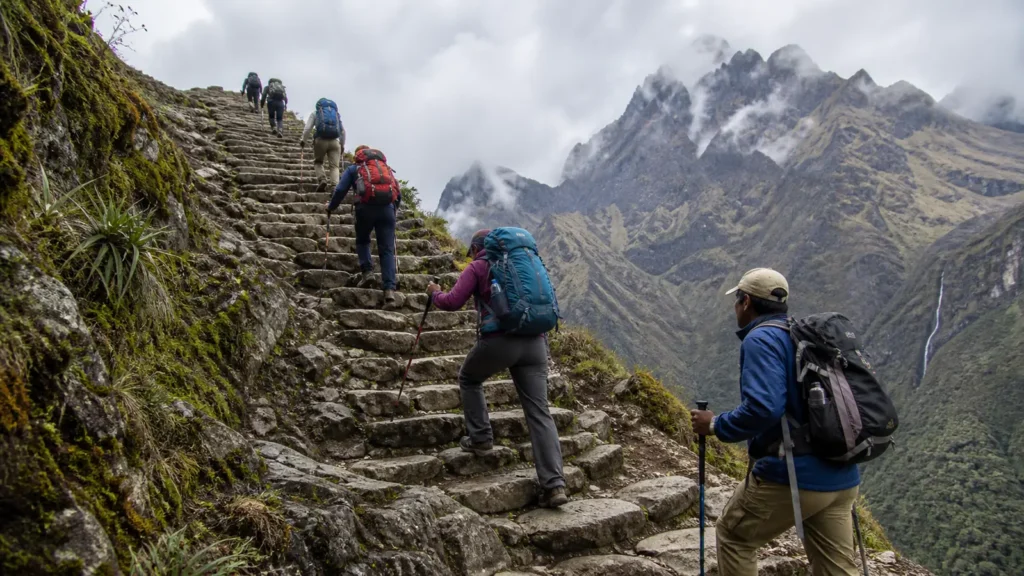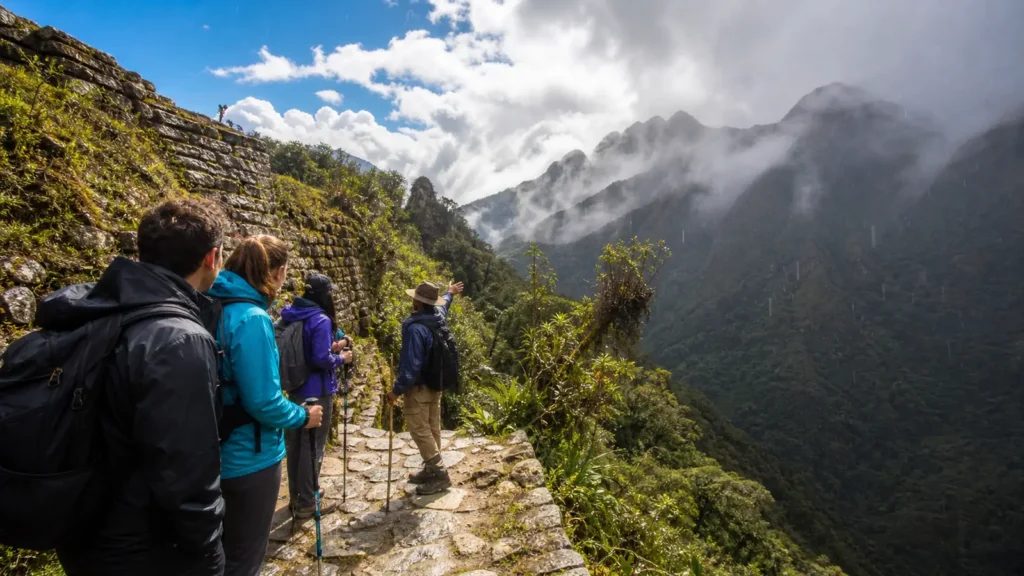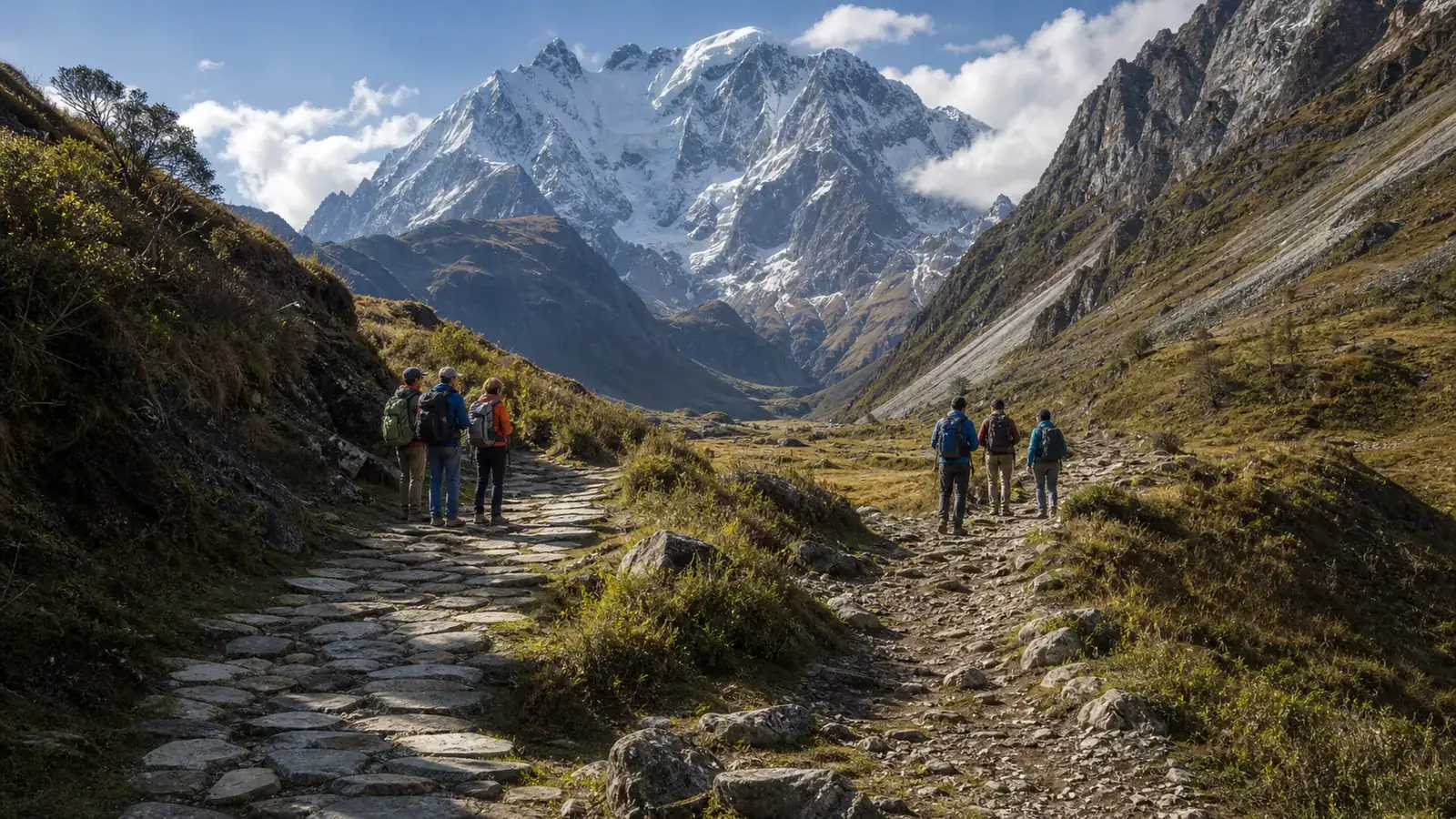

The Inca Trail and the Salkantay Trek are two very different ways to build a trekking journey around Machu Picchu. Both cross dramatic Andean landscapes and require preparation for altitude, but the experience on the ground is not interchangeable. The Classic Inca Trail is a protected archaeological route that follows original stone paths and reaches Machu Picchu through Intipunku. A typical Salkantay itinerary places more emphasis on glaciated mountains, a higher pass and rapid changes from alpine terrain to cloud forest before reaching Machu Picchu from Aguas Calientes.
The better trek therefore depends on what you value most. Choose the Inca Trail if archaeological sites, historic paving and the traditional approach to Machu Picchu are central to your trip. Consider Salkantay if your priority is high-mountain scenery, varied ecosystems and more flexibility when regulated Inca Trail spaces are unavailable.
Inca Trail vs Salkantay Trek at a Glance
| Factor | Classic Inca Trail | Salkantay Trek |
|---|---|---|
| Main appeal | Archaeology, original Inca road and arrival through the Sun Gate | Glaciated peaks, a high pass and changing mountain ecosystems |
| Access | Regulated spaces and traveler details are required in advance | Usually more date flexibility, subject to the operator and itinerary |
| Highest terrain | High Andean pass above 4,000 meters | Salkantay Pass is generally higher than the Classic route’s highest pass |
| Archaeology | Several important sites encountered along the trail | Less continuous archaeological focus |
| Machu Picchu approach | On foot through Intipunku on the final stage | Common itineraries reach Aguas Calientes before the Machu Picchu visit |
| Best for | History-focused hikers who can reserve early | Mountain-focused hikers seeking a strong wilderness component |
Scenery and Atmosphere
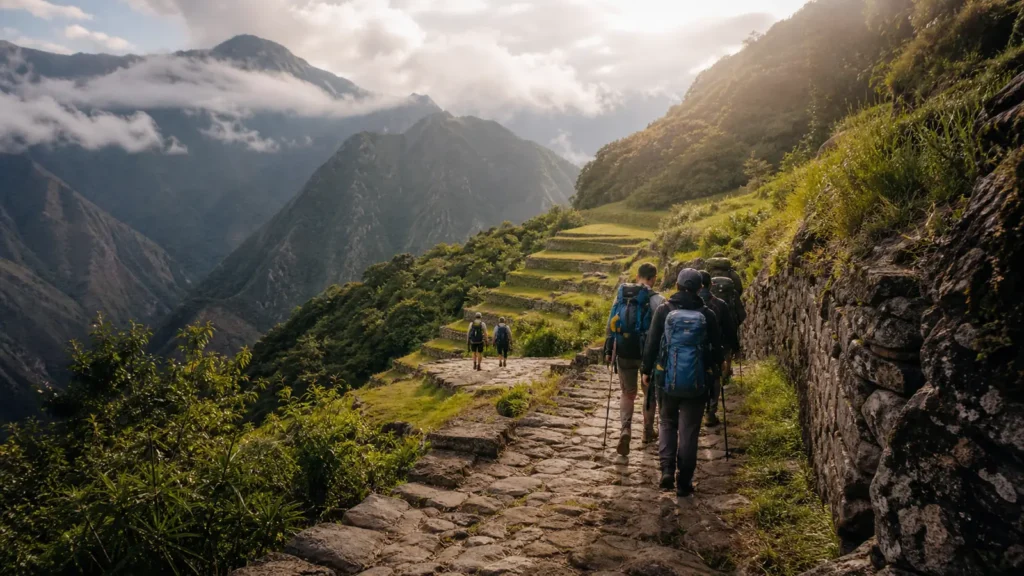
The Classic Inca Trail constantly connects landscape with human history. Agricultural terraces, ceremonial sites, staircases and engineered paths reveal how the route moved through different ecological zones. The trail is famous not simply because it ends near Machu Picchu, but because the route itself is an archaeological experience.
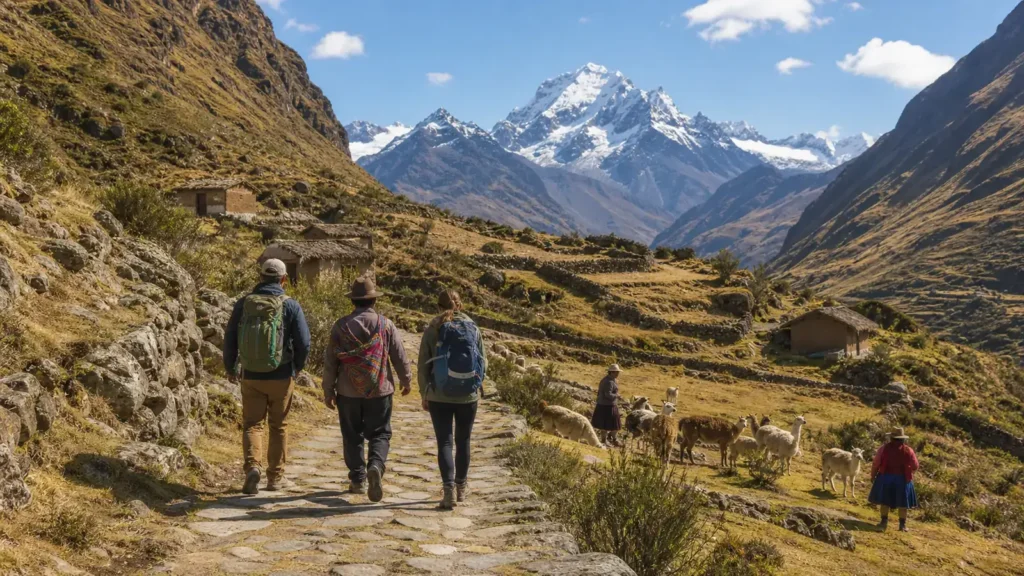
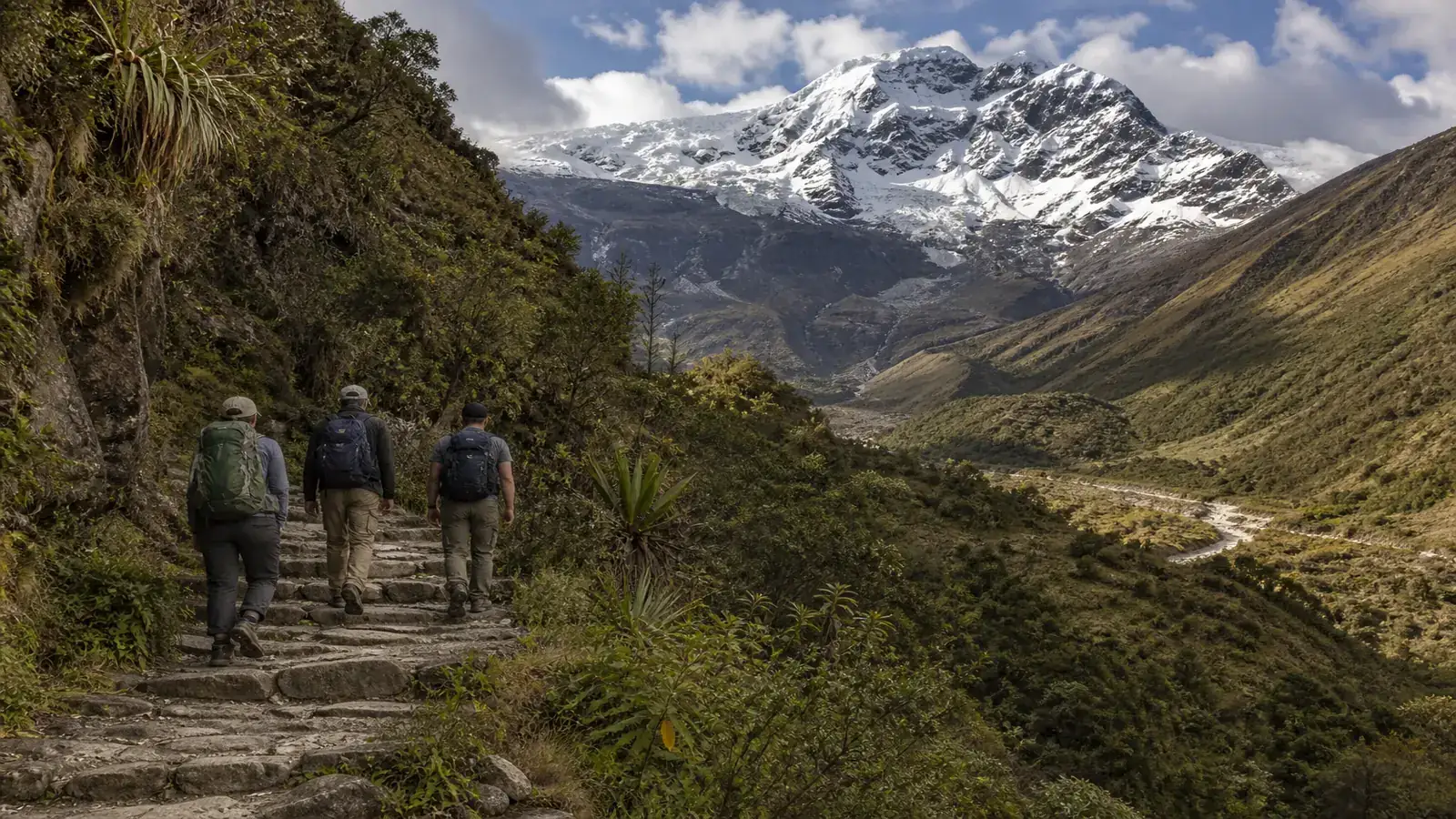
Salkantay feels more like a large-scale mountain traverse. The route is dominated by the Salkantay massif, glacial valleys and the transition toward warmer forest. Depending on the itinerary, hikers may also visit Humantay Lake and pass farms or settlements as the environment changes. If snow peaks and ecological contrast matter more to you than walking through multiple Inca sites, Salkantay may be the stronger choice.
Which Trek Is More Difficult?
Neither route should be treated as an easy walk. Both require consecutive hiking days, early starts, uneven ground and acclimatization. Difficulty also changes with weather, pack weight, itinerary, group pace and your previous training.
Salkantay normally reaches a higher maximum elevation and can expose hikers to colder, more open mountain conditions. The Classic Inca Trail has a lower highest pass, but its repeated stone steps and long descents can be demanding on knees and legs. A person who manages gradual dirt trails well may still find Inca staircases tiring; someone comfortable with steps may struggle more with Salkantay’s altitude.
Prepare with regular cardiovascular work, hill walking and controlled descents. Our Inca Trail training guide and altitude guide cover the same foundations needed for either route.
Permits and Booking Flexibility
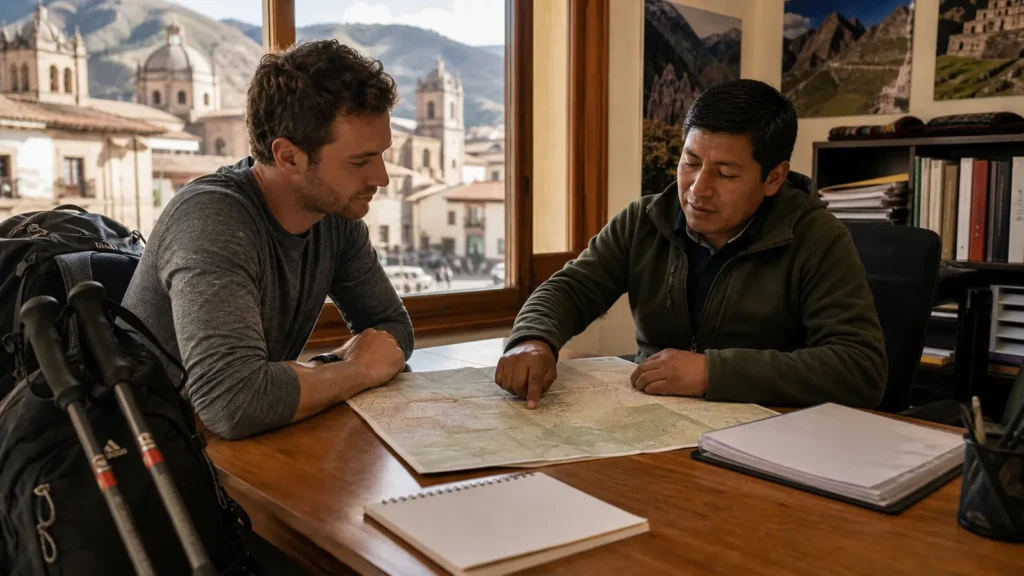
The regulated Inca Trail network has controlled entry. Traveler information must match the booking requirements, and popular dates can become unavailable. This makes early planning especially important. Review our Inca Trail permits guide before committing to flights or a fixed Cusco schedule.
Salkantay is commonly easier to arrange when Classic Inca Trail spaces are gone, but it is not accurate to call every date automatically available. Machu Picchu admission, trains, hotels, route conditions and operator capacity still need confirmation. Booking early remains sensible, particularly during busy travel periods.
Camping, Support and Comfort
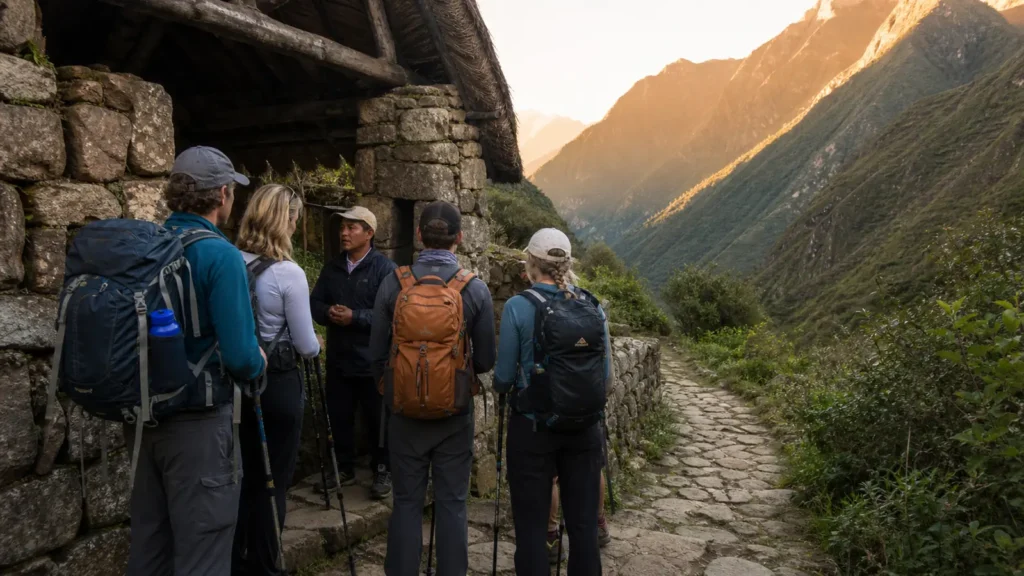
Both treks can include camping, meals, guides and support staff, but packages vary. On the Classic Inca Trail, the controlled route and designated campsites shape the itinerary. Salkantay programs may combine camps with a hotel night in Aguas Calientes, and some operators offer different styles of camp accommodation.
Compare inclusions rather than judging only by the headline price. Check sleeping equipment, personal baggage allowance, transport, Machu Picchu admission, return train, accommodation, meals, emergency equipment and the size of the support team. Our Inca Trail cost guide explains why seemingly similar packages can differ.
How You Arrive at Machu Picchu
This is one of the clearest differences. The Classic Inca Trail continues on foot through Wiñay Wayna and Intipunku, creating a gradual archaeological approach to Machu Picchu. For many travelers, that entrance is the defining reason to choose the route.
Typical Salkantay programs reach the Machu Picchu area through the lower valley and spend a night in Aguas Calientes before entering the citadel. You still visit Machu Picchu, but the emotional rhythm is different: the high-mountain trek and the archaeological visit are more distinct stages.
Choose the Inca Trail If…
- You want original Inca paving and several archaeological sites.
- Entering through the Sun Gate is a priority.
- You can reserve around controlled availability.
- You prefer a trek where history is present throughout the route.
Choose Salkantay If…
- Your main interest is dramatic high-mountain scenery.
- You are comfortable preparing for a higher pass.
- You want changing ecosystems and a less archaeology-centered trek.
- You need an alternative when Classic Inca Trail spaces are unavailable.
Final Decision
There is no universal winner. The Inca Trail is the stronger cultural and archaeological journey; Salkantay is often the stronger pure mountain journey. If your dream is to walk historic stone paths into Machu Picchu, see the Classic Inca Trail to Machu Picchu. If glaciers, a higher pass and landscape transitions are the attraction, review the Salkantay Trek 4 Days.
Frequently Asked Questions
Does Salkantay include Machu Picchu?
Many Salkantay packages include a Machu Picchu visit, but inclusions and the final approach vary. Confirm the entrance, circuit, transport and return arrangements in writing.
Can I switch to Salkantay if Inca Trail permits are unavailable?
Often yes, subject to Salkantay logistics and Machu Picchu availability. It should be treated as a different experience, not an identical substitute.
Which route has more archaeological sites?
The Classic Inca Trail has the stronger continuous archaeological component and follows the protected historic road into Machu Picchu.