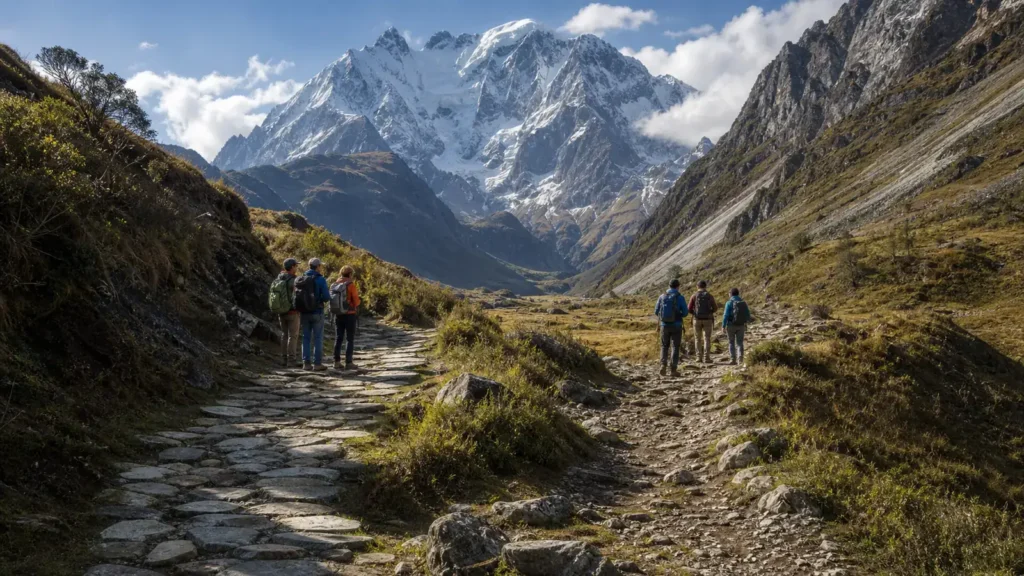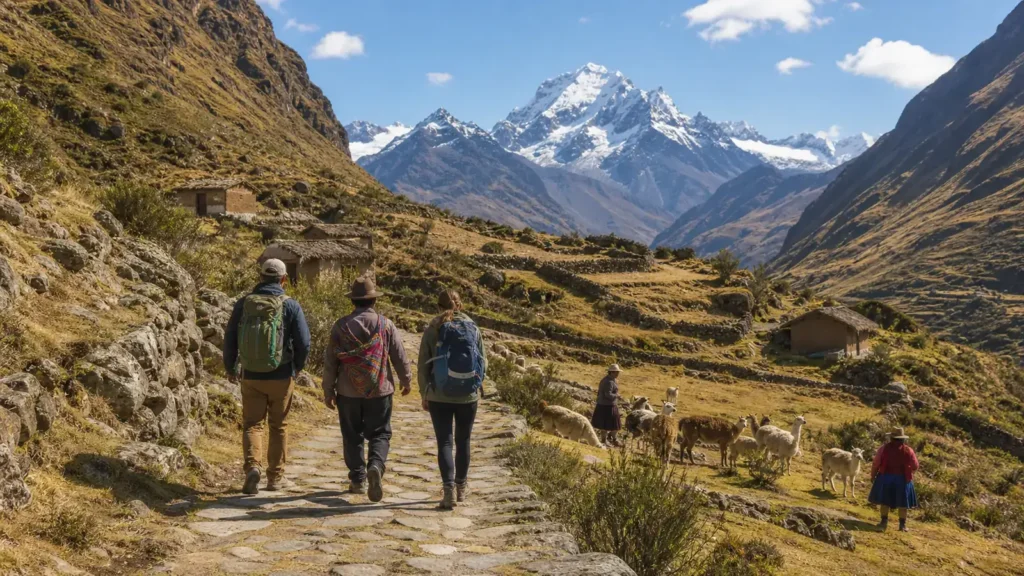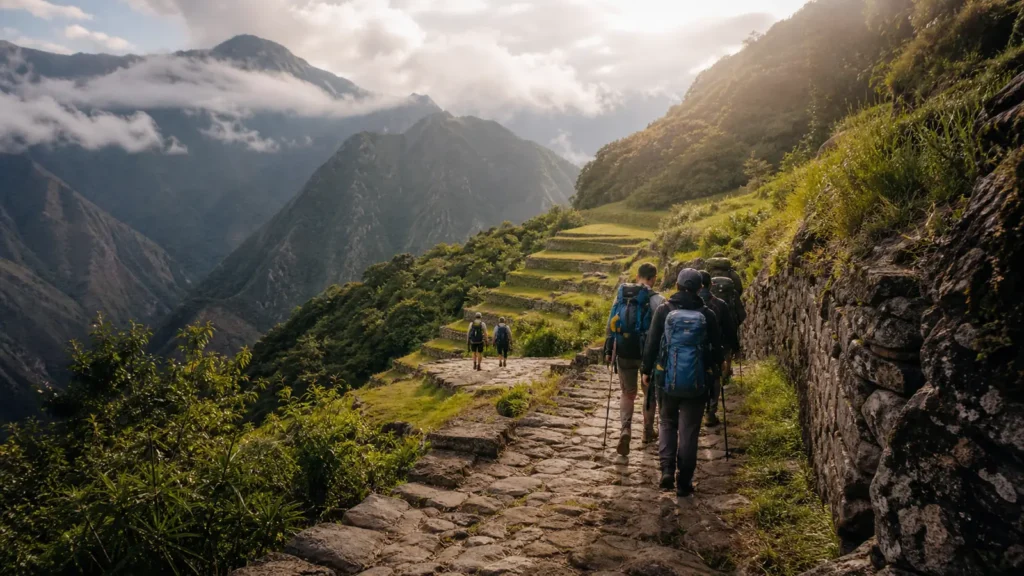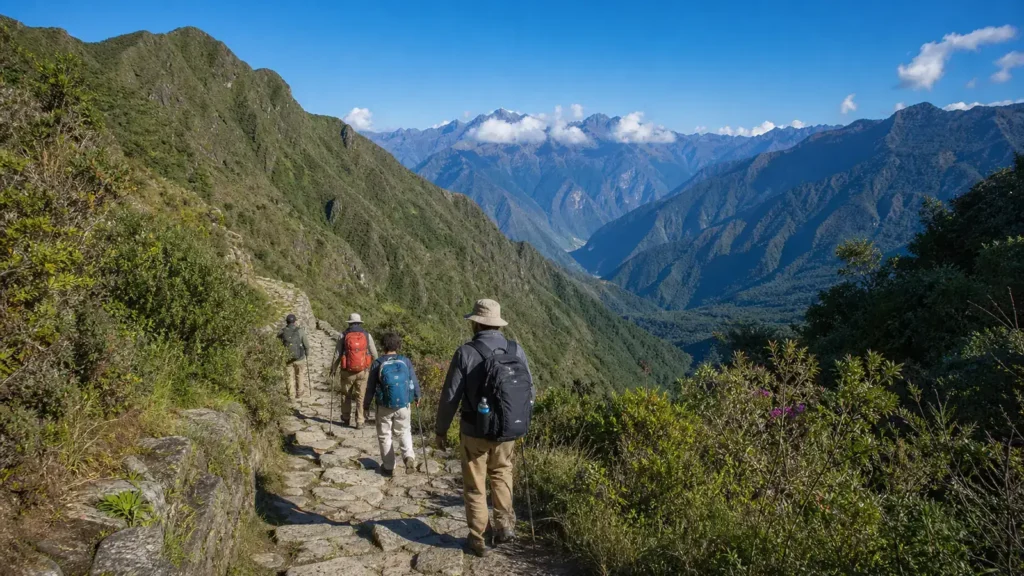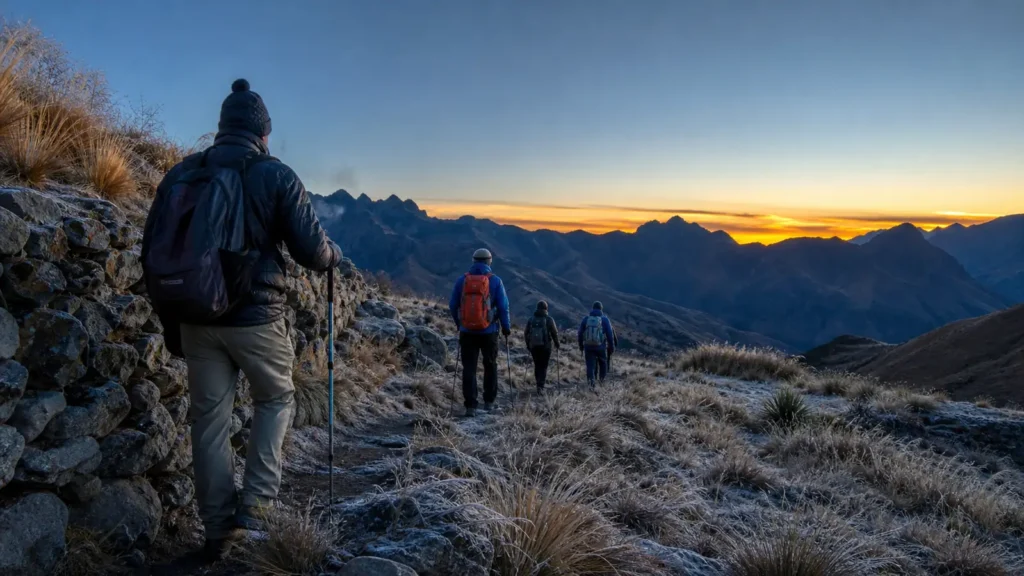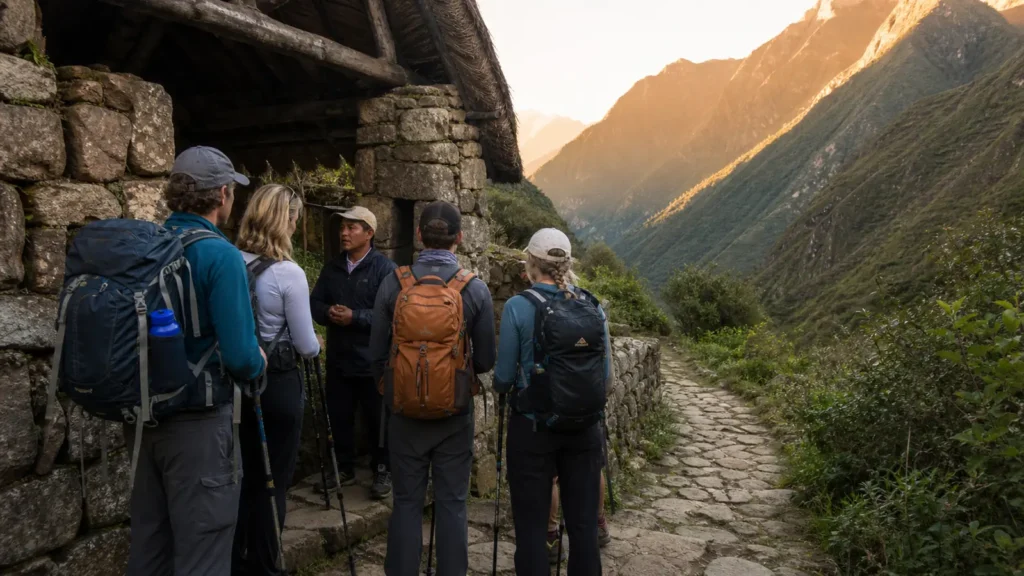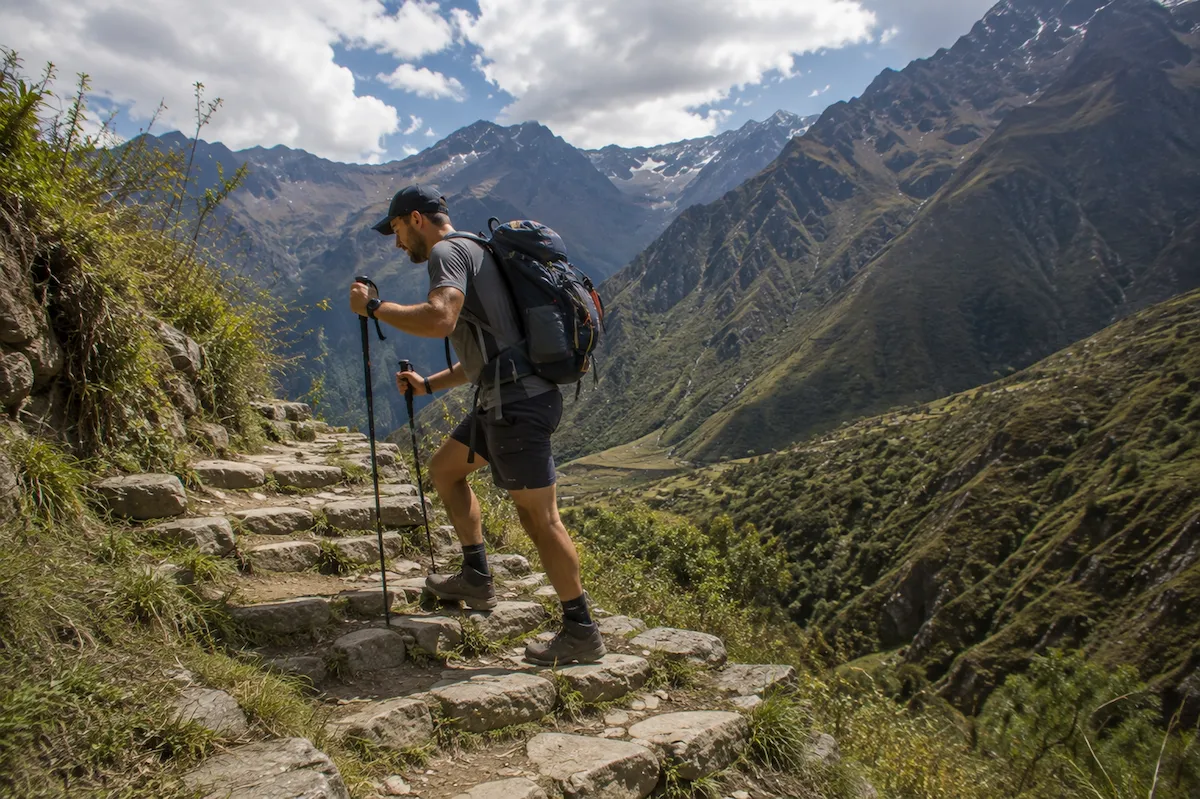

Inca Trail training should prepare you for several consecutive days of walking, sustained climbs, long stone staircases, uneven terrain and high elevation.
You do not need to train like a professional athlete. A consistent program that combines walking, hills, cardiovascular exercise and lower-body strength is more useful than completing a few extremely intense workouts just before your trip.
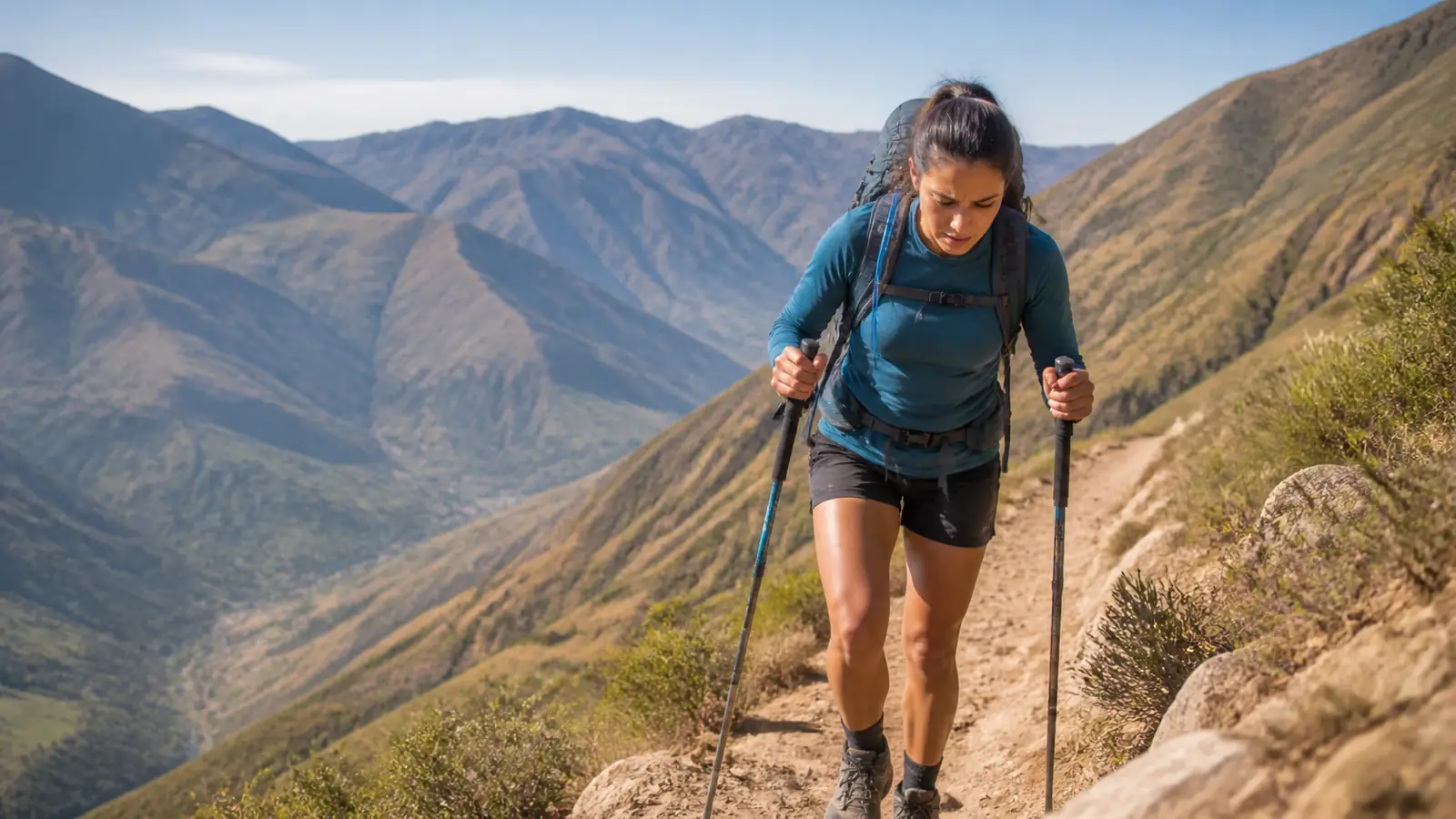
How Fit Do You Need to Be for the Inca Trail?
You should be comfortable walking for several hours and repeating that effort across multiple days.
The route becomes more demanding because distance is combined with elevation gain and altitude.
Before starting a training program, read our guide to Inca Trail difficulty.
When Should You Start Training?
The ideal training period depends on your current activity level.
If you already walk or hike regularly, you may need less preparation than someone starting from a mostly sedentary routine.
The most important principle is gradual progression. Build consistency before increasing distance, elevation and backpack weight.
Start With Walking
Walking is the foundation of your preparation because walking is what you will actually do on the trail.
Begin with distances you can complete comfortably and gradually extend your longer sessions.
Add Hills
Flat walking does not fully prepare your legs for the Inca Trail.
Include routes with hills whenever possible.
Uphill walking develops cardiovascular endurance and leg strength, while downhill walking prepares your muscles for repeated descents.
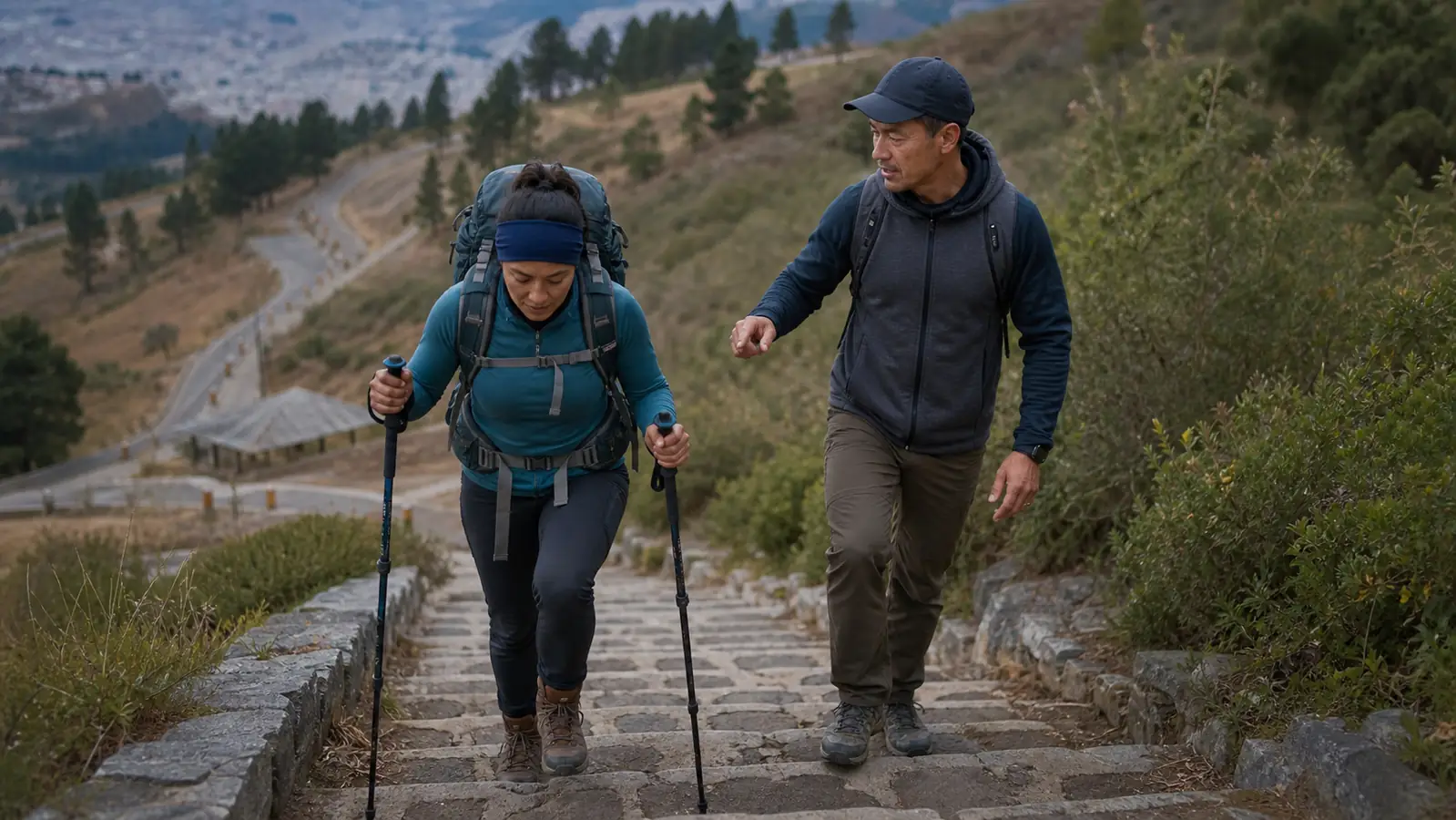
Train on Stairs
If you do not have access to hiking trails, stairs are one of the most useful substitutes.
The Inca Trail includes extensive stone staircases, so repeated stair climbing can help prepare your legs for similar movement.
Cardiovascular Training
Cardiovascular conditioning helps you sustain physical effort for longer periods.
Useful activities include:
- Brisk walking
- Hiking
- Cycling
- Stair climbing
- Elliptical training
- Other sustained aerobic exercise
Choose activities you can perform consistently rather than forcing yourself into a training method you dislike.
Strength Training
Strength work can support your legs and improve stability on uneven terrain.
Useful movements may include:
- Squats
- Step-ups
- Lunges
- Calf raises
- Hip-focused exercises
- Core stability exercises
Use appropriate technique and build gradually.
Train for Downhill Walking
Many travelers focus entirely on climbing, but the Inca Trail also contains long descents.
Descending places different stress on the legs, especially the quadriceps and knees.
Include downhill walking in your preparation when possible.
Train With a Daypack
Once you have built a basic level of fitness, complete some walks wearing the type of daypack you expect to use during the trek.
Start light and gradually add the items you normally carry:
- Water
- Rain jacket
- Warm layer
- Snacks
- Camera
- Personal items
Do not train with an unnecessarily heavy backpack simply because the trek is difficult.
Test Your Hiking Shoes During Training
Training sessions are the best time to test your footwear.
Wear the shoes or boots you plan to use in Peru during longer walks so you can identify discomfort before traveling.
Train on Uneven Terrain
Whenever possible, move beyond smooth pavement.
Natural trails help develop balance and foot placement for uneven surfaces.
Example Weekly Training Structure
| Day | Training Focus |
|---|---|
| Day 1 | Moderate walk or cardio |
| Day 2 | Strength training |
| Day 3 | Rest or light activity |
| Day 4 | Hills or stairs |
| Day 5 | Strength or moderate cardio |
| Day 6 | Longer hike or walk |
| Day 7 | Recovery |
This is only a general structure. Adjust the volume to your current fitness level and schedule.
Practice Back-to-Back Walking Days
The Classic Inca Trail is not a one-day event.
As your training improves, occasional consecutive walking days can help you understand how your body feels when hiking again before fully recovering from the previous day.
Do You Need to Train at Altitude?
Most travelers cannot reproduce Inca Trail elevation at home.
That does not make training useless.
Improve your general hiking fitness, then allow time to acclimatize after arriving in Peru.
Read our detailed Inca Trail altitude guide.
Fitness Does Not Prevent Altitude Symptoms
A strong cardiovascular system can make physical exertion easier, but being fit does not guarantee that you will not notice high elevation.
Treat fitness and acclimatization as two separate parts of your preparation.
How Hard Should Your Training Be?
Your training should challenge you without repeatedly leaving you injured or exhausted.
Consistency over several weeks is more useful than completing one extremely difficult hike and then needing a long recovery.
Recovery Matters
Rest is part of training.
Allow your body time to recover, especially after longer hiking sessions or demanding strength workouts.
Train in the Equipment You Will Use
Before traveling, test:
- Hiking footwear
- Daypack
- Hiking socks
- Trekking poles if using them
- Layering system
Use our Inca Trail packing list when organizing your equipment.
Four Weeks Before Departure
By this point, your training should feel consistent rather than experimental.
Continue longer walks and hills while avoiding sudden major increases in training volume.
One Week Before the Trek
Your final week is not the time to prove how fit you are.
Reduce training intensity and allow your body to arrive in Peru rested.
Training Mistakes to Avoid
Starting Too Hard
A sudden jump from no training to long daily sessions increases the chance of soreness or injury.
Ignoring Downhill Training
The trail contains long descents as well as climbs.
Training Only Indoors
Gym training can help, but outdoor walking provides useful experience with terrain, weather and equipment.
Using New Shoes on the Trek
Break in your footwear before departure.
Assuming Fitness Solves Altitude
Allow time for acclimatization regardless of your fitness level.
Frequently Asked Questions About Inca Trail Training
Do I need to run?
No. Running can be useful cardiovascular exercise, but it is not mandatory. Walking and hiking are more specific to the trek itself.
Can beginners train for the Inca Trail?
Yes. Beginners should allow enough time for gradual progression and should not underestimate the route.
Should I train with a heavy backpack?
Train with a realistic daypack rather than adding unnecessary weight simply to make training harder.
Are stairs good training?
Yes. Stairs are particularly useful when you do not have easy access to hills or trails.
How important is leg strength?
Strong legs help with climbs, descents and stability, but endurance and acclimatization are also important.
Arrive Prepared, Not Exhausted
The goal of Inca Trail training is to arrive in Peru comfortable with sustained walking and repeated elevation changes.
Combine training with appropriate acclimatization and equipment preparation.
Then review how to plan the Inca Trail before finalizing your trip.