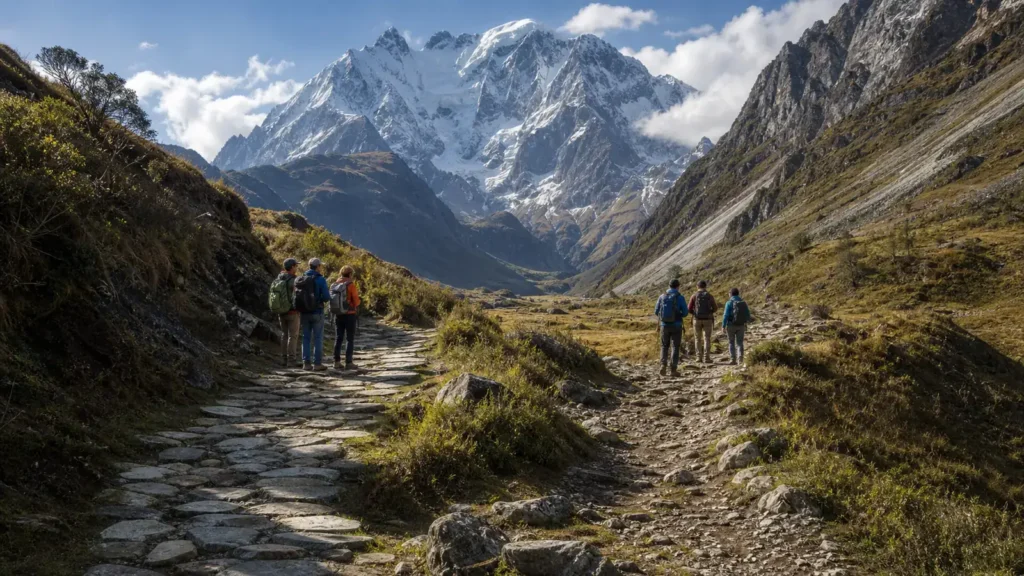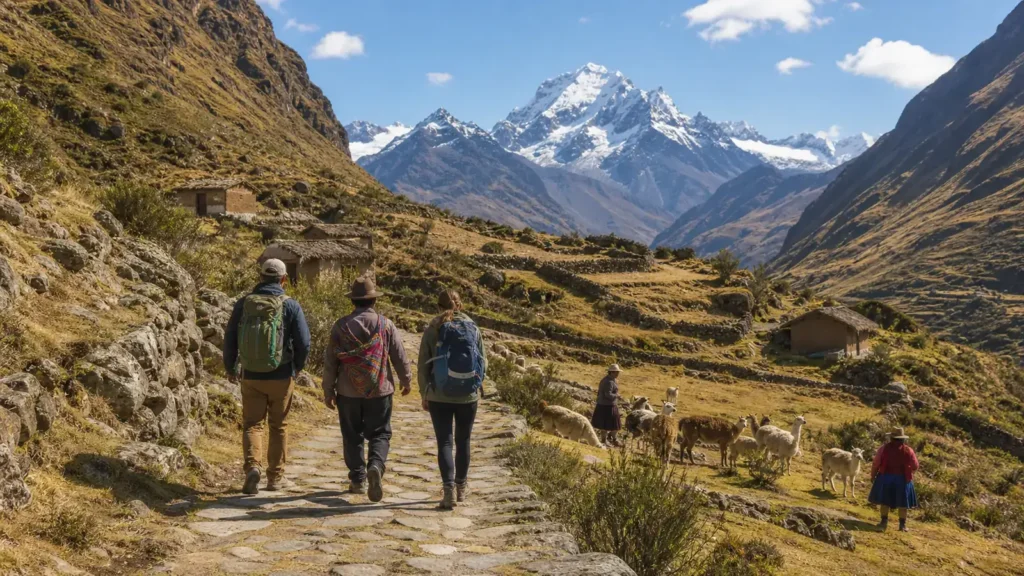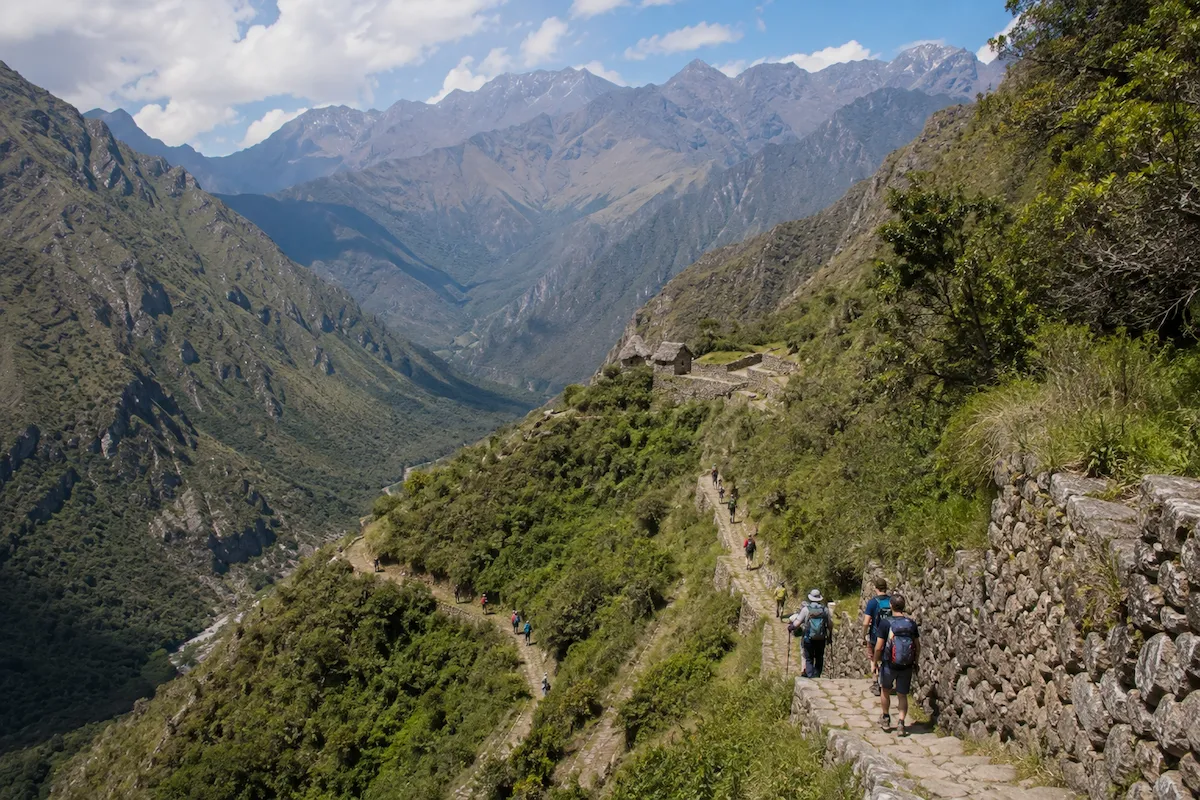

The Classic Inca Trail covers approximately 42 kilometers or 26 miles from the traditional trailhead area toward Machu Picchu.
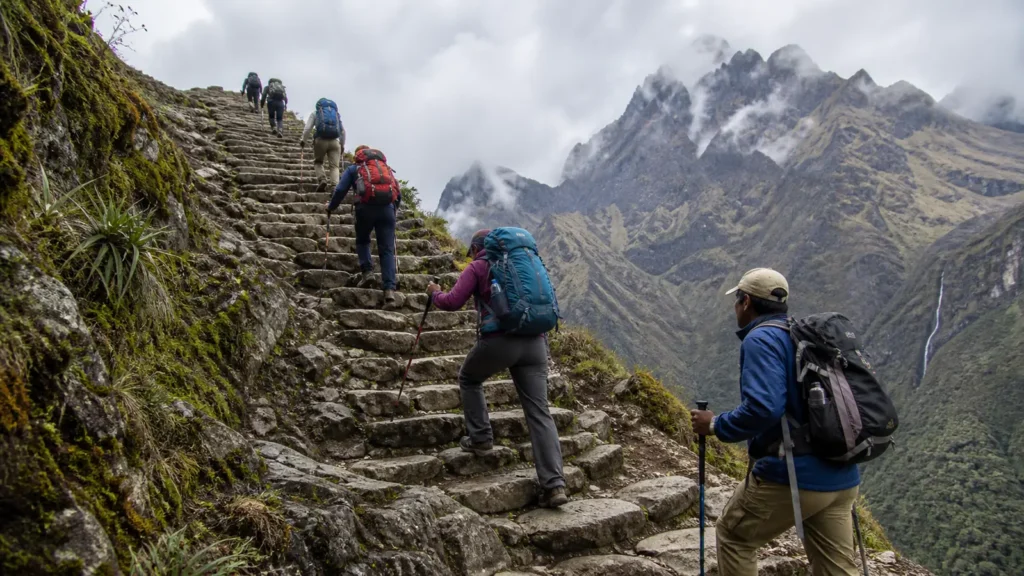
That distance may not sound extreme compared with some long-distance trails, but mileage alone does not explain the difficulty. High elevation, steep climbing, repeated descents and extensive stone staircases make the route more demanding than a simple 42-kilometer walk.
How Long Is the Classic Inca Trail?
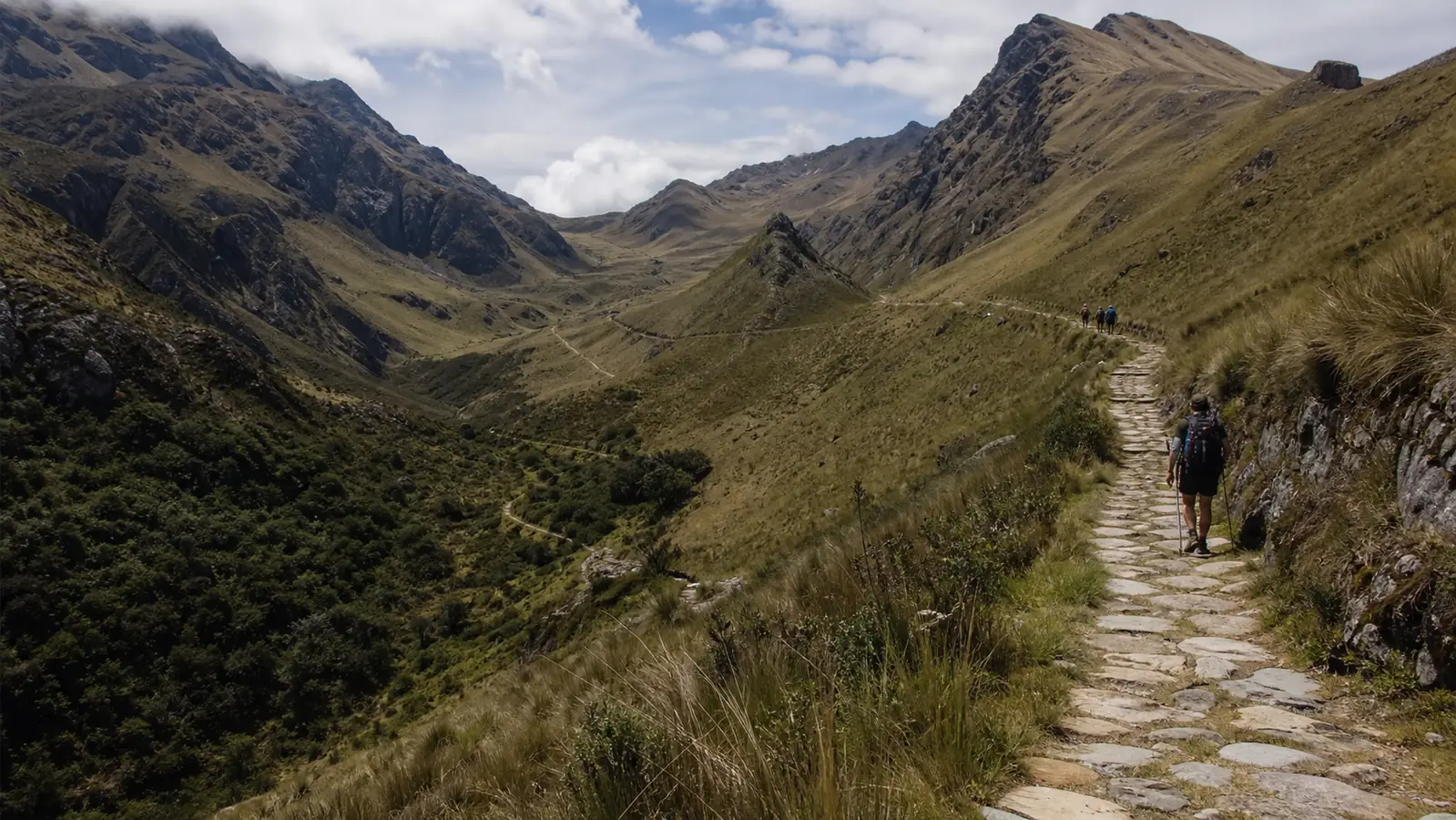
The traditional Classic Inca Trail is approximately:
- 42 kilometers
- 26 miles
Exact figures can vary slightly depending on the specific points used for measurement and campsite arrangements.
How Many Days Does It Take?
The classic trekking itinerary is normally completed over several days rather than as one continuous hike.
This gives travelers time to cross the high passes, visit archaeological sites and camp along the route.
Why 42 km Can Feel Much Harder
The trail is not flat.
You repeatedly climb and descend while moving between different elevations.
The main factors include:
- High altitude
- Steep climbs
- Stone staircases
- Long descents
- Uneven terrain
- Several consecutive hiking days
This is why Inca Trail difficulty should not be judged by distance alone.
Inca Trail Distance by Day
Daily distances vary according to campsite assignments and itinerary structure.
| Day | General Character |
|---|---|
| Day 1 | Initial approach and gradual elevation gain |
| Day 2 | Major climb toward the highest pass |
| Day 3 | Multiple archaeological areas, climbs and descents |
| Day 4 | Final approach toward Machu Picchu |
Your exact daily mileage can vary, so use these descriptions as a general route overview rather than a fixed schedule.
What Is the Longest Day?
The most demanding day is not always determined by mileage.
A day with a major elevation gain can feel harder than a longer day on easier terrain.
The climb toward Dead Woman’s Pass is a clear example.
Distance vs Elevation Gain
Two hikes with the same distance can feel completely different when one includes substantial elevation gain.
On the Inca Trail, elevation changes are a central part of the experience.
See our Inca Trail elevation profile for a closer look at the climbs and descents.
How Long Does It Take to Walk Each Day?
Walking time depends on terrain, weather, group pace, rest stops and your response to altitude.
Do not calculate your expected hiking time using the pace you normally walk on flat pavement.
Does Altitude Slow You Down?
It can.
Reduced oxygen at higher elevations can make climbing feel more demanding and may naturally reduce your pace.
Read our Inca Trail altitude guide before planning your trek based only on distance.
How Does the Terrain Affect Distance?
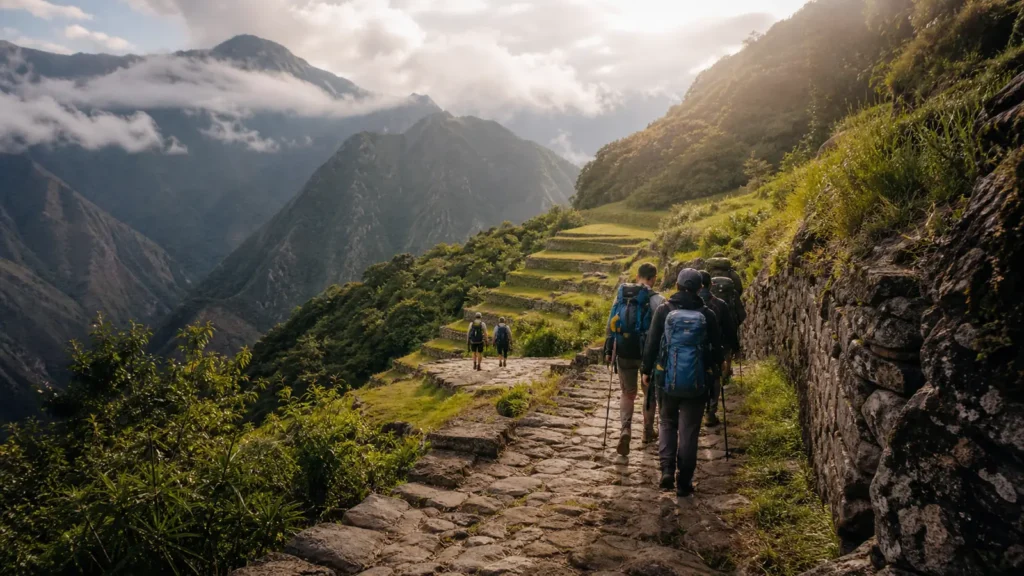
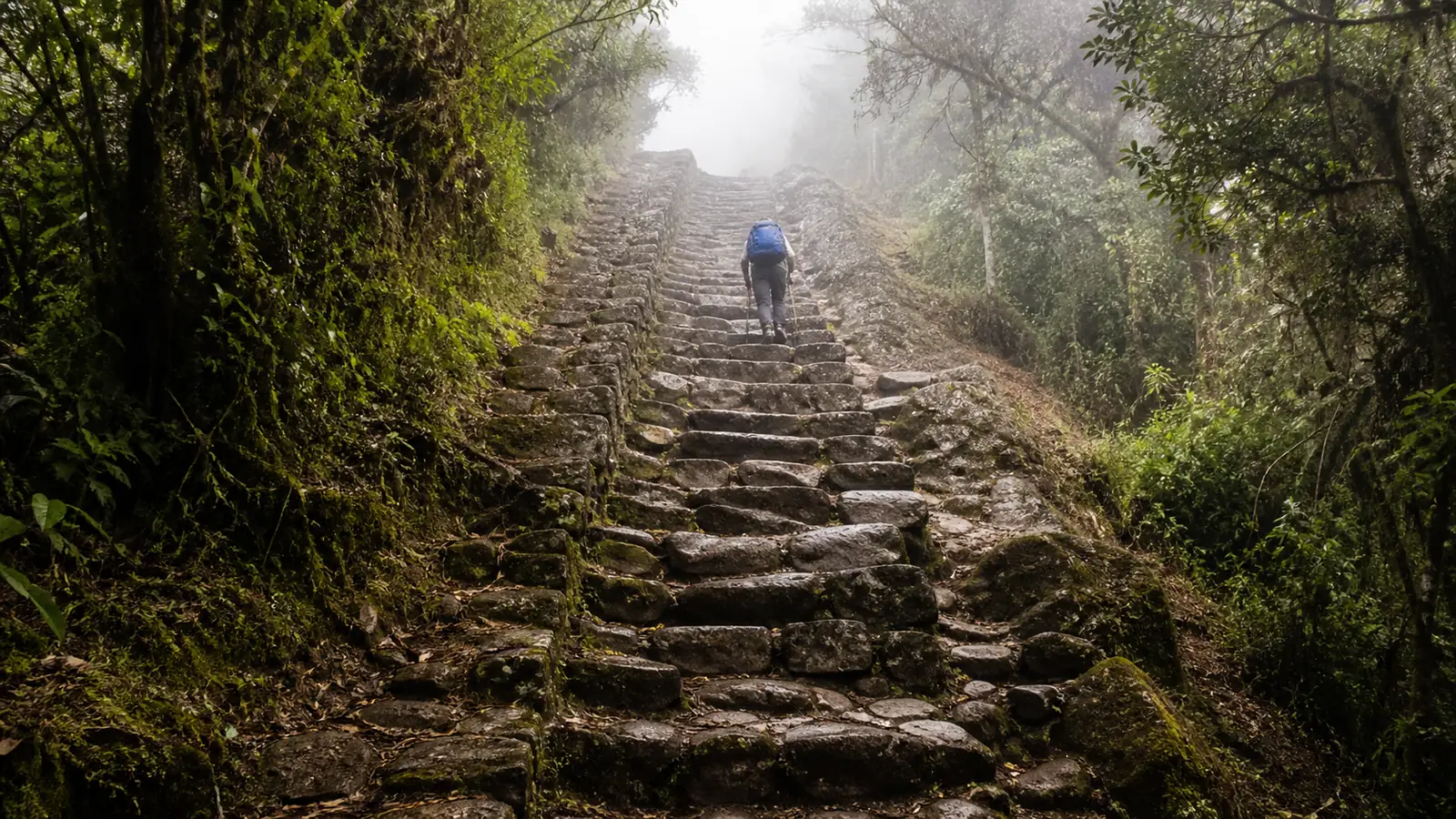
The Classic Inca Trail includes ancient stone pathways and extensive staircases.
You may move much more slowly on steep stone steps than on a smooth dirt trail.
Does Rain Change the Hiking Pace?
Wet stone surfaces can become slippery, particularly on descents.
Your pace may need to slow during wet conditions.
This is one reason your travel month and equipment matter.
How Far Is the Short Inca Trail?
The Short Inca Trail involves significantly less hiking than the full Classic route.
It is designed for travelers who want a historic trail experience but do not have time or desire for the complete multi-day trek.
Compare the Short Inca Trail vs Classic Inca Trail.
Is the Inca Trail a Marathon?
The total Classic Inca Trail distance is similar to a marathon in overall length, but comparing the two directly is misleading.
A marathon normally takes place in one continuous event, while the Inca Trail is completed across multiple days and involves large elevation changes and mountain terrain.
Do You Need to Walk 42 km Before Your Trip?
No.
You do not need to complete the entire Inca Trail distance in one training session.
Instead, build endurance gradually and become comfortable with hills, stairs and repeated walking days.
Use our Inca Trail training guide.
How Much Should You Carry?
Your daypack adds to the effort required to cover the distance.
Carry only the items you realistically need during the day.
See our packing list before preparing your equipment.
Distance and Campsites
Campsite assignments influence the way the total route is divided between days.
Learn more in our guide to Inca Trail campsites.
Frequently Asked Questions About Inca Trail Distance
How many miles is the Inca Trail?
The Classic Inca Trail is approximately 26 miles or 42 kilometers.
Can you walk the Inca Trail in one day?
The regulated Classic route is designed as a multi-day trekking experience. Travelers looking for a shorter hike should consider the Short Inca Trail.
Is 42 km difficult?
The mileage is manageable for many active travelers, but altitude, stairs and elevation changes make the trek more demanding than the number alone suggests.
How far do you hike each day?
Daily distance varies according to the itinerary and campsite assignments.
Should I train by walking 42 km?
No. Build endurance progressively and include hills and stairs rather than attempting the entire distance in one training session.
Distance Is Only Part of the Challenge
The Inca Trail distance is useful for understanding the scale of the route, but it should always be considered together with elevation and terrain.
Continue with the Inca Trail elevation profile to understand why the trek feels more challenging than a flat 42-kilometer walk.